


What Is LRF Fishing? Gear, Tactics & Best Reels for UK Waters

Light Rock Fishing — LRF for short — is one of the fastest-growing disciplines in UK sea angling. Imported from Japan, where finesse lure fishing has been refined over decades, LRF strips tackle back to its bare essentials: an ultra-light rod, a small spinning reel, fine braid, and a tiny soft plastic or jig head no heavier than a few grams. The result is a style of fishing that is accessible from almost any harbour wall or rocky mark, targets a huge variety of inshore species, and delivers a level of sport that punches far above the size of the fish involved.
In this guide
What is LRF fishing?
LRF stands for Light Rock Fishing. The "rock" element refers to the rocky inshore habitat — harbour walls, jetties, rock marks, reef edges and weedy ground — where the technique is most productive. The "light" element refers to everything about the gear: rods typically rated for lures from 0.5 g to 7 g, reels in the 500 to 2000 size range, braid as fine as PE #0.2 to #0.6, and terminal tackle consisting of jig heads under 5 g paired with soft plastics measuring 1 to 3 inches.
LRF arrived in the UK in the early 2010s, carried by anglers who had fished Japan's ajing (horse mackerel) and mebaing (black rockfish) styles and recognised immediately that UK inshore waters were full of species that would respond to the same approach. Today it is fished from Cornwall to the Scottish islands, wherever there is rocky or mixed ground close to shore.
The technique does not require a boat, specialist access, or expensive bait. A good session of LRF can be had from a harbour wall at dusk with a single box of soft plastics and one rod. That accessibility, combined with the genuine skill ceiling that the technique rewards, explains its rapid growth.
Target species for LRF in the UK
Wrasse
Ballan wrasse and corkwing wrasse are the most sought-after LRF species in the UK. Ballan wrasse are the larger of the two, regularly reaching 2–4 lb on rocky ground in the south and west, and will take small paddle-tail soft plastics, shrimp imitations and crab-pattern lures fished tight to the rock. Corkwings are smaller but willing biters and are often the species that gets beginners hooked on LRF. Both species respond to a slow, irregular retrieve with plenty of pauses.
Pollock and coalfish
Pollock (lythe) and coalfish (saithe) are arguably the most sporting LRF species pound for pound. Even small pollock in the 8–14-inch range fight with an aggression that feels entirely disproportionate on a 3 g jig head. They respond to a faster, more erratic retrieve than wrasse, particularly on paddle-tail and shad-style soft plastics worked in the water column around kelp edges and harbour piers.
Scorpionfish (short-spined sea scorpion)
The short-spined sea scorpion is widespread around UK coasts and is a LRF catch that surprises many anglers with its willingness to ambush a lure several times its own body length. They lie motionless on the substrate and hit a dragged or hopped jig head hard. Handle carefully — the dorsal spines can cause a painful puncture wound.
Gobies, blennies and mini-species
Rock gobies, common blennies, tompot blennies, sand gobies and even two-spotted gobies are legitimate LRF targets, particularly for anglers pursuing the "UKBF mini-species" goal of catching as many different species as possible. These fish are caught on the smallest jig heads — 0.5 g to 1 g — fished on the bottom with the tiniest worm or shrimp imitations.
Other bonus species
Depending on the mark and the season, LRF anglers in the UK regularly encounter bass (especially juveniles around harbour structures), mackerel, garfish, scad, sand eels, flounder (from sandy patches adjacent to rock), and even the occasional sea trout in estuaries. The technique's versatility is one of its great strengths.
LRF gear: what you need
The rod
A dedicated LRF rod is typically 5'6" to 8' in length and rated for lures from 0.5 g to 7 g, though some specialist "micro" rods go down to 0.2 g. Look for a fast or extra-fast tip action that loads under the weight of a small jig head — this is what transmits the feel of the lure working through the water and alerts you to subtle bites. The blank material matters: high-modulus carbon, as used in the Shimano Soare SS series, produces the sensitivity that distinguishes a good LRF rod from a budget light spinning rod.
Two-piece travel-friendly rods are popular for LRF because many of the best marks require a short walk along a coastal path. The Shimano 22 Soare SS Ajing S68SULS and the Shimano 22 Soare SS S86MLT are both two-piece designs that break down small without sacrificing sensitivity.
If you are targeting larger wrasse or want to move into rockfishing and black seabream as your LRF experience grows, the Shimano 24 Hard Rocker BB S 76ML bridges the gap — still a light rod, but rated for heavier jig heads up into the 14–20 g range and suited to deeper marks.
The reel
Reel choice is where LRF anglers often invest the most, because a smooth, sensitive drag and a precisely engineered retrieve make a significant difference when fishing 2 lb fluorocarbon to a 0.5 g jig head. The standard size range for LRF is 500 to 2000 — smaller than most sea anglers are used to. A 500 or 1000 size keeps the outfit balanced with a light rod and gives a better feel on the retrieve. A 2000 size offers slightly more line capacity and is a good choice if you are fishing a broader range of conditions.
Japanese-market spinning reels dominate LRF. Their bearings, drag systems and gear tolerances are engineered specifically for ultra-light applications in ways that budget European or Chinese reels are not. The Shimano Soare series is the benchmark.
Line: braid and leader
Braid is the mainline of choice for LRF. Fine PE braid — typically PE #0.2 to #0.6 — has near-zero stretch, which transmits every tap and knock from the lure directly to your fingertips. On a small 500 or 1000-size reel, fine braid also means you carry plenty of backing depth without the spool being overloaded. Shimano Pitbull 8 in #0.6 (150 m) is a well-regarded choice for LRF — an 8-strand construction that casts smoothly from a super-shallow spool and remains highly visible for strike detection.
A fluorocarbon leader of 24–36 inches is essential between the braid and your jig head. Fluorocarbon is near-invisible underwater, abrasion-resistant against rock, and provides a small amount of shock absorption when a fish bolts for cover. For most UK LRF, a 4–6 lb (approximately 2–3 lb test curve) fluorocarbon leader is appropriate.
Jig heads and soft plastics
The core LRF terminal rig is a round or bullet-shaped jig head with a short-shank hook, paired with a 1" to 2.5" soft plastic body. Jig head weights of 0.5 g, 0.8 g, 1 g, 1.5 g, 2 g and 3 g cover the full range of LRF scenarios — lighter heads for shallow harbour walls, heavier ones for slightly deeper or tidal marks where you need to maintain contact with the bottom.
Soft plastic choice is wide, but a few categories cover most situations. Shad-tail or paddle-tail micro shads produce vibration on the retrieve and work well for pollock and wrasse. Worm-profile lures fished on a slow drag mimic actual marine worms and work on almost everything. Shrimp and prawn imitations are particularly effective for wrasse and scorpionfish. The INX Label Jako Shad Baity 1.8" Shedding Shrimp is a Japanese-market lure designed precisely for this style of fishing — a shedding-shrimp profile at 1.8" that sits comfortably on a 1–2 g jig head.
Isome (artificial ragworm) and Gulp! worm imitations are the "nuclear option" of LRF soft plastics. Isome in particular has an extraordinarily scent-like quality that triggers reluctant fish and is especially effective when water clarity is low or fish are showing short bites on conventional lures.
LRF rigs explained
Jig head rig
The simplest and most-used LRF rig: hook the soft plastic through the nose onto a round jig head, cast, let it sink to the desired depth, and retrieve. You can vary the retrieve — slow roll, hop-and-pause, darting rip — depending on species and depth. The jig head rig covers the majority of LRF situations.
Drop-shot rig
A drop-shot suspends the soft plastic at a fixed distance above a sinker, keeping the lure in the strike zone without it resting on the bottom. This is effective when fish are holding in a specific depth band — particularly pollock on harbour structures — and when the bottom is so snaggy that a jig head immediately catches. Use a small hook tied Palomar or with a drop-shot knot, with a 0.5–3 g bomb sinker below.
Split-shot rig
A split-shot pinched 10–20 inches above a small, unweighted hook with a worm or shrimp lure is arguably the most natural-looking LRF presentation. The lure sinks slowly and can be twitched with tiny rod-tip movements. This rig excels for finicky species like tompot blennies, gobies, and cautious corkwing wrasse in clear, shallow water.
Texas rig (weedless)
On heavily snaggy ground where standard jig heads lose you tackle constantly, a Texas-rigged worm-profile soft plastic with the hook point buried back into the body slides through kelp and rock with far fewer hang-ups. You sacrifice some hook-up rate, but on a heavily weedded mark it is often the only approach that lets you fish productively.
Where and how to fish LRF in the UK
Harbour walls and piers
Harbour walls are the ideal starting point for LRF. They concentrate species — wrasse live in the weed and mussel growth on the wall's submerged face, pollock patrol the corners and shadow edges, gobies and blennies colonise the bottom rubble. Fish at dusk and into dark for the best action. Cast parallel to the wall and work the lure along its face, or fish straight down and "jig" with short rod-tip lifts.
Rocky marks and headlands
Open rocky marks offer access to larger wrasse, the occasional bass, and more open-water pollock. Safety must come first on exposed rock — wear a life jacket or buoyancy aid, and be aware of swell and wave height at all times. Fish the gullies, kelp edges and rocky points where species shelter from tide. A slightly heavier jig head (2–5 g) is often needed to stay in contact with the bottom in tidal flow.
Estuaries and tidal channels
Estuaries bring in flounder to sandy patches, schoolie bass to the deeper channels, and mullet on light lures — though mullet on lures require significant patience and specialist small lure techniques. LRF in estuaries is at its best in summer when baitfish schools move in and predators follow.
Timing and tide
LRF is a year-round technique, but late spring through autumn produces the broadest species mix. Wrasse are most active in summer; pollock and coalfish fish well through autumn and into winter. Tide is important — fish the last two hours of the ebb and the first two of the flood on most marks, when current and oxygenation levels encourage feeding. Slack water on a large spring tide can be very slow.
Best LRF reels: the Shimano Soare range
Shimano's Soare series has been the gold standard for Japanese LRF (ajing and mebaring) for over a decade, and it translates directly to UK LRF conditions. Three models currently available at Britannic Trade span entry-level through to top-tier performance.
Shimano Soare BB C2000SSPG — the accessible entry
The Shimano 22 Soare BB C2000SSPG is the gateway reel in the range. Its C2000 body with Super Shallow (SS) spool is designed to work optimally with fine PE braid and light fluorocarbon — standard LRF lines fill the spool correctly without excessive backing. The 4.6:1 power gear ratio keeps retrieve speed conservative, giving you more feel and control on a slow retrieve for wrasse and gobies. At 3 kg max drag, it is more than capable of stopping a decent wrasse. Five bearings deliver smooth, precise rotation. At £125, it is the sensible first reel for an angler building a dedicated LRF outfit.
Shimano Soare XR C2000SSPG — the mid-range upgrade
The Shimano 25 Soare XR C2000SSPG adds MicroModule Gear II and Silent Drive — Shimano's premium gear meshing and drive system — to the C2000 format. With 9 bearings and 3 kg drag, it offers noticeably smoother retrieval than the BB and is better suited to sessions where you are fishing for extended periods and need that silkiness to maintain concentration. Priced at £274, it is a meaningful upgrade that most serious LRF anglers eventually make.
Shimano Soare XR 500SPG — the specialist micro reel
The Shimano 25 Soare XR 500SPG is a 500-size reel — genuinely tiny, weighing almost nothing in the hand — built for the most demanding sub-3 g finesse work. CI4+ carbon construction keeps weight to a minimum. MicroModule Gear ensures the retrieve feels liquid-smooth even when detecting the most delicate taps on a 0.5 g jig head fished in 4 feet of water. X-Protect water-repellent treatment helps it resist the salt spray and tidal washes that a harbour wall reel must endure. At £268, it represents exceptional engineering at a competitive price point compared to equivalent Japanese-market reel pricing. This is the reel for anglers who are committed to LRF and want the highest sensitivity available.
Quick comparison
| Reel | Size | Gear ratio | Max drag | Bearings | Price | Best for |
|---|---|---|---|---|---|---|
| Soare BB C2000SSPG | C2000 | 4.6:1 | 3 kg | 5+1 | £125 | Entry-level LRF, wrasse, harbour walls |
| Soare XR C2000SSPG | C2000 | 4.4:1 | 3 kg | 9+1 | £274 | Confident LRF, long sessions, smoother feel |
| Soare XR 500SPG | 500 | — | — | — | £268 | Micro LRF, sub-3 g heads, maximum sensitivity |
Building a complete LRF setup
A functional UK LRF outfit does not need to be expensive. A starter build might be:
- Rod: Any light spinning rod rated 1–7 g (upgrade later to a dedicated LRF rod such as the Shimano Soare SS range)
- Reel: Shimano 22 Soare BB C2000SSPG
- Mainline: Shimano Pitbull 8 in PE #0.6 — 150 m is more than sufficient for LRF
- Leader: 4–6 lb fluorocarbon, 24–36 inches
- Terminal: Assorted round jig heads from 0.5 g to 3 g, size 4–8 hooks; a selection of 1–2.5" paddle-tail and worm-profile soft plastics
As you develop your LRF fishing, the rod and reel quality will have the most noticeable impact on your experience. The Soare XR 500SPG is the upgrade path for anyone who wants the full sensitivity of a specialist micro reel.
Recommended tackle at Britannic Trade
- Direct from Japan · 7–14 working days
SHIMANO
Pitbull 8 #0.6 (14.5 lb) – 150m PLM58R Lime Green
£27.00

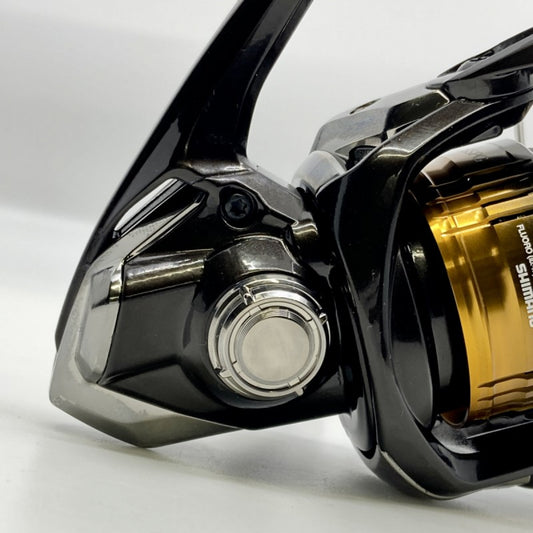

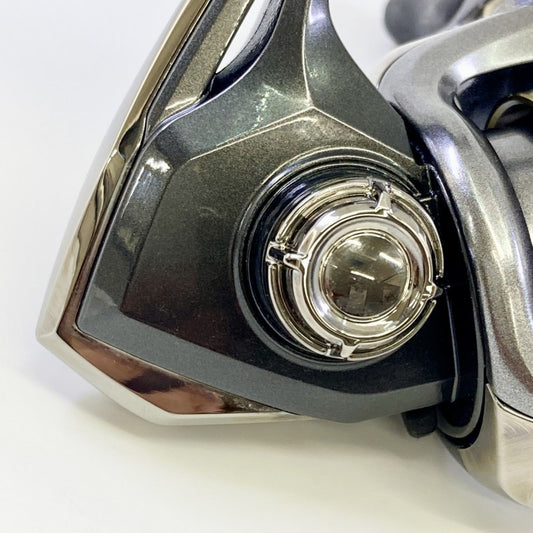


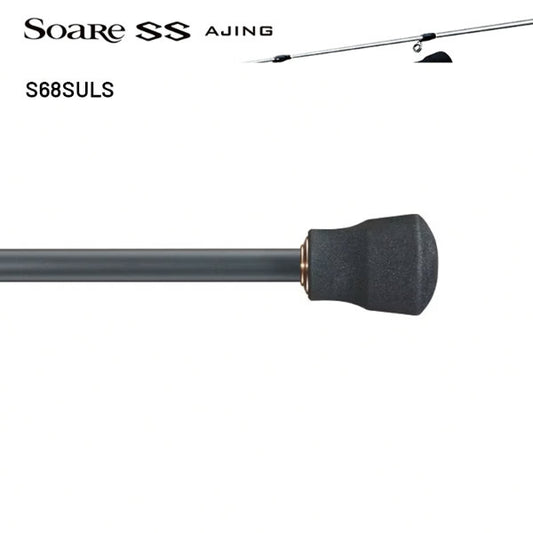


All the core LRF gear below is sourced direct from Japan and stocked at Britannic Trade. Browse the Shimano Soare reels, Soare SS light game rods, and light game lures in our fishing reels, fishing rods, and saltwater lures collections.
Frequently asked questions
What is LRF fishing?
LRF (Light Rock Fishing) is an ultra-light lure technique that originated in Japan, where it is known as ajing (targeting horse mackerel) and mebaing (targeting black rockfish). In the UK context it covers all inshore light-lure fishing from rocky marks, harbour walls and similar structure, using rods rated for lures as light as 0.5 g, fine PE braid mainline, and tiny soft plastics or jig heads to catch wrasse, pollock, gobies, scorpionfish and a wide range of other coastal species.
What reel size is best for LRF?
The most versatile LRF reel size is 1000 to 2000 on Shimano's sizing (equivalent to 1000–2000 on Daiwa's), paired with a super-shallow spool designed for fine PE braid. For the most demanding micro-LRF work with jig heads under 2 g, a 500-size reel — such as the Shimano Soare XR 500SPG — delivers better balance with a short, sensitive rod and maximises the feel you get from the lure. Avoid anything larger than 2500 for dedicated LRF: the added weight kills the sensitivity of a light outfit.
What is the best LRF reel in the UK?
The Shimano 25 Soare XR 500SPG and the Soare XR C2000SSPG are widely regarded as the leading LRF reels available in the UK, bringing MicroModule Gear, Silent Drive, CI4+ construction and X-Protect water resistance together in a package engineered specifically for finesse lure fishing. For anglers not yet ready to invest at that level, the Shimano 22 Soare BB C2000SSPG at £125 offers the same Super Shallow spool design and Japanese build quality at a significantly lower entry price.
What can you catch on LRF in the UK?
UK LRF anglers regularly catch ballan wrasse, corkwing wrasse, pollock, coalfish, short-spined sea scorpion, rock goby, common blenny, tompot blenny, two-spotted goby, sand goby, scad, mackerel, garfish, flounder (on sandy patches), juvenile bass, and — less commonly — mullet, sea trout and small conger. The range of species available is one of LRF's great attractions, particularly for anglers interested in species hunting.
What line should I use for LRF?
Use a fine PE braid as your mainline — PE #0.2 to #0.6 is the standard range, with #0.3 to #0.5 being the most practical all-round choice. Braid has near-zero stretch, which is essential for feeling subtle bites and controlling a tiny lure at range. Connect to a 4–6 lb (2–3 lb test curve) fluorocarbon leader of 24–36 inches using an Albright knot or a double uni. The fluorocarbon provides abrasion resistance where the line contacts rock and is near-invisible in clear UK inshore water.
Do I need a dedicated LRF rod, or will any light spinning rod work?
A light spinning rod rated up to 7–10 g will catch fish on LRF techniques. However, a purpose-built LRF rod rated from 0.5 g or 1 g makes a significant difference: the fast, sensitive tip loads under the weight of a 1 g jig head and transmits bites that a stiffer general-purpose rod would simply not register. Rods like the Shimano Soare SS range are built with high-modulus carbon blanks and guide setups tuned to fine PE braid specifically for this reason. Once you have fished with a dedicated LRF rod, it is very hard to go back.
Explore the full range and find the right setup for your next session — genuine Japanese tackle, delivered across the UK.
Shop the collection →