


Sea Bass Lure Fishing: The Best Japanese Lures and Setup (UK Guide)

Lure fishing for bass has become one of the most rewarding ways to fish the UK coast, and finding the best lures for sea bass in the UK is far less about owning a hundred plugs than it is about reading the conditions in front of you. This guide covers shore-based bass lure fishing from rock marks, estuaries, surf beaches and harbour walls, and walks through the four lure families that consistently catch — shallow runners, surface and topwater lures, sinking minnows, and soft plastics — plus how to match each to the water and the tackle to fish them properly.
In this guide
UK bass are a seasonal, regulated quarry. The main lure season runs roughly from late spring through to autumn, with fish moving onto shallow ground to feed as the water warms. Always check the current Marine Management Organisation bass rules before you fish — minimum size, bag limits and the seasonal catch-and-release period change from year to year — and handle fish carefully if you intend to release them.
Reading the conditions before you tie on a lure
The single biggest mistake in bass lure fishing is choosing a lure by colour or brand rather than by what the water is doing. Before anything else, judge three things: the depth and structure you are fishing over, the surface state (flat calm, a light chop, or coloured surf), and the light. Those three factors decide the lure type far more reliably than any "hot pattern".
- Shallow, snaggy ground (rock marks, reefs, weed): you need lures that swim high in the water to stay above the rocks — shallow runners and surface lures.
- Flat calm and low light (dawn, dusk, summer nights): topwater pencils and poppers come into their own, drawing explosive surface hits.
- Estuaries and tide races with flow: sinking minnows and weighted soft plastics let you hold a swimming depth and work seams and current edges.
- Coloured surf and rough beaches: larger, vibrating minnows that push water and give the fish something to home in on.
The four lure families that catch UK bass
Shallow runners
A shallow-running minnow is the workhorse of UK bass lure fishing. It swims in the top metre or so of water, which keeps it clear of the kelp and broken ground that bass patrol, and it covers water efficiently on a steady or slow retrieve. These are the lures to reach for over shallow reefs, on a making tide pushing fish onto rock platforms, and along estuary edges. A floating shallow runner that you can pause over a snag and let rise is especially useful on rough ground.
Surface and topwater lures
Few things in fishing beat a bass smashing a surface lure. Topwater pencils (worked with a "walk-the-dog" side-to-side action) and poppers shine in calm to lightly choppy water, particularly at first and last light and through warm summer nights. They are highly visual and superb for searching shallow, weedy bays where a diving lure would foul. When bass are clearly feeding on the surface or herding fry, topwater is often the most effective choice of all.
Sinking minnows
Sinking minnows give you range and depth control. You can count them down to fish deeper gullies, hold a swimming depth in flow, and punch them into a headwind — invaluable from harbour walls, deeper estuary channels and tide races where a floating lure simply skates across the top. They also cast further than most floaters, which matters when fish are out of comfortable range on an open beach.
Soft plastics
Soft plastic shads and senko-style baits on a weighted or jig head are the most versatile bass lures of all, and frequently the most consistent. A slow, low-and-slow retrieve along the bottom of an estuary, a gentle lift-and-drop through a tide run, or a weedless rig fished over kelp will tempt fish when hard lures are ignored. Soft plastics are also forgiving for newcomers — a steady retrieve with the occasional pause catches plenty of bass.
Matching the lure to the venue
- Rock marks and reefs: shallow floating runners and weedless soft plastics that stay above the snags.
- Estuaries: soft plastics and sinking minnows worked along current seams and drop-offs; topwater at dawn over the shallows.
- Surf beaches: larger sinking or strongly vibrating minnows that hold in moving water and a coloured sea.
- Harbour walls and piers: sinking minnows and jig-head soft plastics fished down the structure and into the current.
Tackle: rod, reel and line for bass lures
A typical UK bass lure outfit is a 8–9ft rod rated around 7–35g, paired with a 3000-size spinning reel and braid mainline. That combination casts the 10–30g lure weights bass fishing revolves around, has the backbone to set hooks and steer fish away from rocks, and stays light enough to fish all day.
- Mainline: braided line in roughly the PE 1.0–1.5 (around 16–25lb) range gives long casts, direct contact and the strength for snaggy ground.
- Leader: a fluorocarbon leader of around 12–20lb knotted to the braid resists abrasion against rock and barnacle and adds shock absorption.
- Reel: a sealed or saltwater-rated spinning reel in the 3000–4000 size, with a smooth drag, is essential — saltwater is unforgiving of cheap reels.
Recommended tackle at Britannic Trade
- Direct from Japan · 7–14 working days
DAIWA
Shoreline Shiner Z Vertice R 125F-LI Floating LI Chart Head Mojito
£36.00

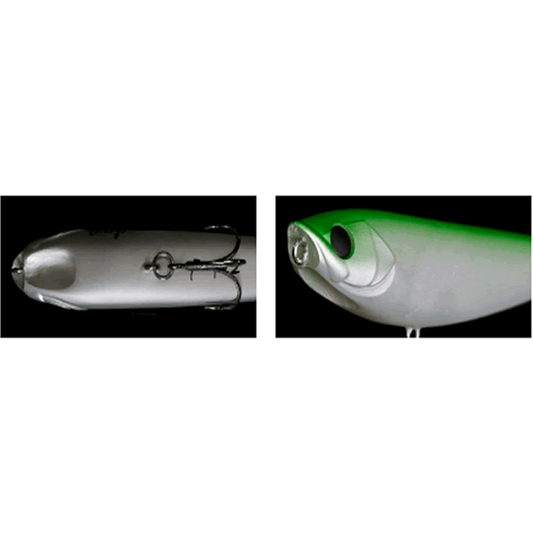


We import genuine Japanese tackle direct from Japan. Here are the categories and items most relevant to UK bass lure fishing — browse the collections to pick the size and pattern that suit your marks:
- Saltwater fishing lures — the main collection for shallow runners, topwater pencils, sinking minnows and bass plugs.
- APIA lures — a respected Japanese maker of seabass lures; see the APIA Argo 105 (105mm, 16g, floating), a floating surface-orientated lure built for working over shallow ground.
- ZIP BAITS lures — well known for finely tuned minnows that swim true on the cast and retrieve.
- Pozi Drive Garage lures — a specialist Japanese seabass lure brand worth exploring for shallow-water work.
- Daiwa Shoreline Shiner Z Vertice R 125F — a 125mm floating shore-casting minnow designed for distance and shallow swimming, a strong all-round bass choice.
- Jackall Hagre 96F (96mm, 12.2g, floating) — a compact floating lure for finesse situations and pressured fish.
- Fishing rods and fishing reels — to build a balanced bass lure outfit.
- Fishing lines — braid mainline and fluorocarbon leader from brands such as VARIVAS and SUNLINE.
FAQ
What is the best lure for sea bass in the UK?
There is no single best lure — the best choice depends on conditions. A shallow-running floating minnow is the most reliable all-round starting point for UK shore bass, with a topwater pencil for calm low-light sessions and a soft plastic shad for slow, deep or coloured water. Carry one of each type rather than many of one.
When is the best time to lure fish for bass in the UK?
The lure season generally runs from late spring into autumn, with dawn, dusk and the hours around a moving tide being the most productive. Warm summer nights can be excellent for topwater. Always check the current bass size limits and seasonal regulations before fishing.
What size lure should I use for bass?
Most UK bass lures fall in the 90–140mm range and 10–30g in weight, which matches common prey such as sand eels and small baitfish and suits a typical 7–35g bass rod. Go smaller and lighter for pressured or finicky fish, larger for surf, distance and coloured water.
Braid or mono for bass lure fishing?
Braid is preferred for lure fishing because it has almost no stretch, giving direct contact with the lure and better hook-sets, and it casts further for its diameter. Always add a fluorocarbon leader for abrasion resistance against rock and to add a little shock absorption.
Can I fish topwater lures from a beach?
Yes, particularly on calmer surf beaches and over shallow, weedy ground at dawn and dusk. In heavier surf or a strong onshore wind a sinking or strongly vibrating minnow that holds in moving water will usually fish better and cast more reliably.
Explore the full range and find the right setup for your next session — genuine Japanese tackle, delivered across the UK.
Shop the collection →