



If you have been searching for the best Japanese spinning reels available to UK anglers, you have almost certainly run into a wall of model codes, letter suffixes and competing claims. This guide cuts through it. We explain how Daiwa and Shimano size and seal their reels, which gear ratios suit which styles of UK fishing, and how the tiers stack up from honest budget workhorses right through to the flagship Exist and Stella. Whether you fish rock marks for wrasse and pollock, work surf beaches and estuaries for bass, or finesse stillwaters and rivers for perch and trout, the aim is to help you buy once and buy right.
In this guide
Understanding the LT and size system
The single most useful thing to learn first is how reels are numbered. Daiwa's modern spinning range is built around LT (Light & Tough): a body and rotor architecture that delivers a given spool size in a lighter, more compact frame than older designs. A Daiwa size code such as LT2500 or LT4000 tells you the spool and line capacity class; Shimano uses a parallel numbering system (for example C3000, 4000, 5000) where the leading "C" denotes a compact body mated to a larger spool.
As a rough UK guide:
- 1000–2000 / SF (Super Finesse): ultralight work — LRF (light rock fishing), ajing for scad and small species, area and stream trout, perch on micro lures. Fine PE braid and 2–4 lb fluorocarbon.
- 2500–3000: the genuine all-rounder. Lure fishing for bass from estuaries and harbour walls, light shore jigging, drop-shotting for perch, and most river and stillwater predator work.
- 4000–5000: shore jigging, heavier bass and pollock from rock marks, light surf and float work, and bigger reservoir predators where you need line capacity and cranking power.
- 5000 and above: surf casting, big-fish shore jigging and rough-ground graft where drag and capacity matter most.
Spool depth letters: S, D and the body code
Suffixes refine the picture. On Daiwa, an S (shallow) spool is matched to fine braid and finesse lines, while a D (deep) spool holds more line for distance casting or heavier lines. A trailing C often signals a compact body relative to the spool size — more capacity without the weight penalty. You do not need to memorise every permutation; just read the code as "spool class + spool depth + gear speed".
Gear ratios: matching retrieve speed to technique
The gear-ratio letters at the end of a model code tell you how fast the reel retrieves line per handle turn. Daiwa typically uses P (power/slow), no letter or standard for medium, H (high) and XH (extra-high). Shimano uses PG, HG and XG for the same idea.
- Slow / power (P, PG): deliberate line control for finesse — slow micro-jig retrieves, sink-and-draw, and detecting hesitant bites from wrasse, perch and pressured trout.
- Medium: the safe default if you fish several styles and want one reel that does most jobs well.
- High / extra-high (H, XH, HG, XG): fast pick-up for shore jigging, working metals and topwater for bass, and any method where you need to retrieve slack quickly or burn a lure back to recast.
A practical rule for UK shore lure anglers: if you are unsure, a 2500–3000 in high gear covers bass, pollock and most predator fishing, while a slow-geared shallow-spool reel is the specialist tool for LRF and ajing.
Sealing and corrosion protection: MAGSEALED vs X-Protect
For UK saltwater fishing — rock marks, surf, estuaries and harbour walls — water ingress is the enemy that quietly destroys reels. This is where Japanese sealing technology earns its keep.
- Daiwa MAGSEALED: uses a magnetic oil to form a barrier at the main shaft and (on higher models) the line roller, keeping salt, sand and water out of the bearings without adding the friction of a hard rubber seal.
- Shimano X-Protect: a labyrinth and water-repellent treatment around the body, line roller and handle knob that resists intrusion while keeping rotation light.
Sealed vs light: which matters more for you?
There is a genuine trade-off. The most heavily sealed reels are superbly protected but a little heavier; the lightest finesse reels prioritise feel and fatigue-free all-day casting. Decide by environment:
- Harsh saltwater (surf, exposed rock marks, regular dunkings): prioritise sealing and a robust body.
- Freshwater and sheltered LRF (rivers, stillwaters, calm harbours): prioritise low weight and smoothness; sealing matters less and you keep the lightest possible setup.
The tiers: from budget to flagship
Both brands run a clear ladder. Spending more buys lighter, tougher materials, more sealing, smoother gearing and finer drag — not magic. Here is how to think about each rung.
Budget and entry (honest workhorses)
Entry-level reels like Daiwa's Crest give you the LT body and a usable drag at the lowest price. Ideal as a first dedicated lure reel, a backup, or a knockabout reel for rough ground where you would rather not risk an expensive one.
Mid-range (the value sweet spot)
This is where most UK anglers should look. Daiwa's Caldia and Shimano's Twinpower (and the lure-finesse Complex XR) deliver real sealing, refined gearing and durability that will last years of regular use — without flagship pricing. For dedicated LRF and ajing, Shimano's Soare family is purpose-built for fine lines and tiny lures.
High-performance (semi-flagship)
Reels such as Daiwa's Certate and Shimano's Vanquish and Twinpower XD bridge the gap: most of the flagship refinement and toughness, aimed at anglers who fish hard and often and want a reel that disappears in the hand.
Flagship
At the top sit Daiwa's Exist and Shimano's Stella. These are the lightest, smoothest and most thoroughly engineered reels each brand makes, with the finest drags and the most complete sealing. They are a genuine investment for serious anglers who want the best — and they hold their value.
Recommended tackle at Britannic Trade


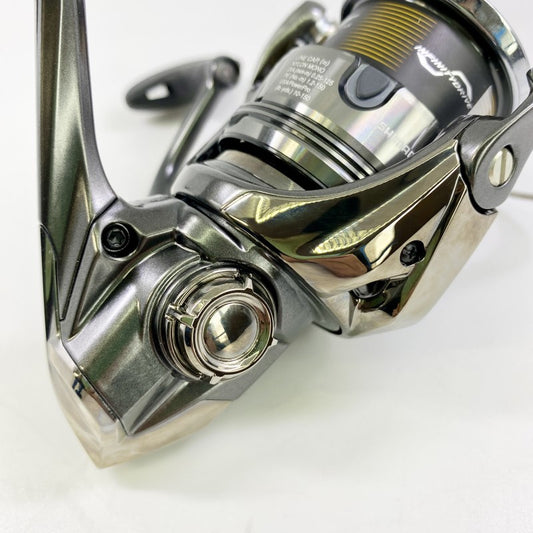

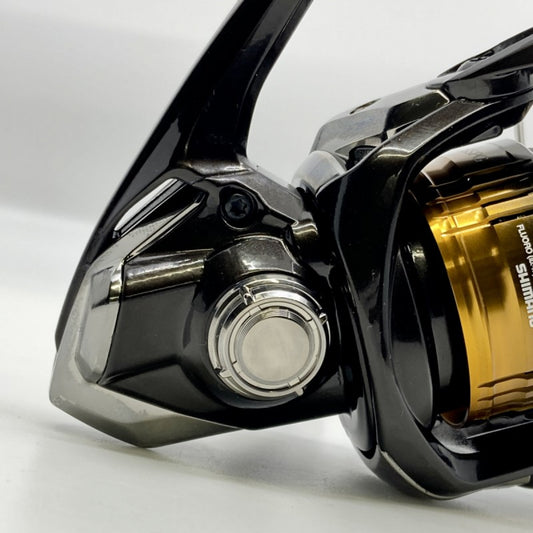

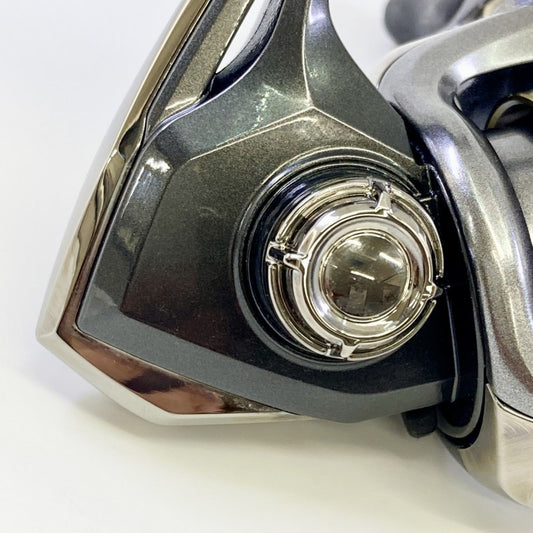


We import these reels direct from Japan as genuine domestic-market products. Here is a starting selection across price points and styles:
- Budget all-rounder: the Daiwa Crest LT 5000-C — an honest entry into the LT system for shore lure and predator fishing.
- Mid-range value: the Daiwa Caldia LT 5000-CXH for shore jigging, or the Shimano Twinpower C3000MHG as a sealed all-round bass and predator reel.
- LRF and ajing: the Shimano Soare BB C2000SSPG and the higher-spec Shimano Soare XR 500SPG, or Daiwa's finesse-focused Exist SF 2000SS-H.
- High-performance: the Daiwa Certate LT 4000-C and the ultralight Shimano Vanquish C3000XG for anglers who fish hard.
- Flagship: the Daiwa Exist LT 5000-CXH and the Shimano Stella C3000SDH.
Browse the full ranges by brand — DAIWA and SHIMANO — or see every reel we stock in the Fishing Reels collection. Pair your reel with quality braid and leader from our Fishing Lines range.
FAQ
What size spinning reel is best for UK shore lure fishing?
For general shore lure fishing — bass from estuaries, harbour walls and beaches, plus pollock and predators — a 2500–4000 sized reel is the most versatile. Step up to 5000 for shore jigging or heavier surf and rough-ground work, and drop to 1000–2000 for LRF, ajing and ultralight freshwater methods.
What does LT mean on a Daiwa reel?
LT stands for Light & Tough. It is Daiwa's design platform that fits a given spool size into a lighter, more compact body than older designs, so an LT4000 weighs less and feels more balanced than a comparable older 4000-class reel.
Are MAGSEALED and X-Protect reels worth it for saltwater?
If you fish salt regularly — rock marks, surf, estuaries — yes. Both MAGSEALED (Daiwa) and X-Protect (Shimano) keep salt, sand and water out of the gearing and bearings, dramatically extending reel life. For sheltered freshwater fishing the benefit is smaller, so you can prioritise low weight instead.
Do I need a flagship reel like the Exist or Stella?
No — they are superb but not necessary. Most UK anglers are best served by the mid-range (Caldia, Twinpower, Complex XR) or high-performance tier (Certate, Vanquish). Flagships make sense if you fish very often, demand the lightest possible setup, or want a reel that will last many seasons and hold its value.
What gear ratio should I choose for bass lure fishing?
A high (H/HG) or extra-high (XH/XG) gear ratio suits most bass lure work, letting you pick up slack quickly when working surface lures and metals and recast efficiently. Choose a slower power (P/PG) ratio only if you specialise in finesse presentations for cautious fish.
Choose your reel
The right Japanese spinning reel comes down to your venue, your target species and how hard you fish. Start from the size and gear ratio that match your style, decide how much sealing you need, then pick a tier that fits your budget. Explore the full lineup in our Fishing Reels collection, or go straight to DAIWA and SHIMANO to find your next reel.
