



HRF and Wrasse Fishing in the UK: Rigs, Soft Lures and Tackle

HRF (hard rock fishing) is lure fishing for bigger wrasse over rough, weedy ground. In the UK the main target is the ballan wrasse. Fish soft lures on a weedless Texas rig or a free rig, in daylight, from spring to autumn. A 7 to 8.5 ft rod rated up to about 30 g, a 2500 to 3000 size reel and PE 0.8 braid with a fluorocarbon leader will cover most marks.
In this guide
What is HRF?
HRF stands for hard rock fishing. It is a modern style of lure fishing for larger rock fish, and it started in Japan. The methods came from bass fishing in the USA, by way of Japan. In the UK, HRF means one thing: lure fishing for wrasse, above all the ballan wrasse.
HRF is the heavier version of LRF (light rock fishing). LRF uses jig heads of a few grams for small fish. HRF uses heavier weights, stronger line and weedless rigs, because big wrasse live in kelp and rock that would snag an open hook.
UK wrasse species
Several wrasse live around UK rocks. These are the ones you are most likely to meet:
| Species | Typical shore size | Where and how |
|---|---|---|
| Ballan wrasse | 1 to 3 lb | Heavy rock, kelp and weed. Found around the UK, with the most and biggest fish in the south and south-west. The main HRF target. |
| Cuckoo wrasse | Under 1 lb | Slightly deeper water than ballans. More common in the south and west. |
| Corkwing wrasse | Rarely over 9 in | Shallow rocky water. Best on LRF tackle. |
| Goldsinny wrasse | Rarely over 6 in | Shallow water in the west and south-west. Best on LRF tackle. |
Ballan wrasse can reach almost 10 lb, and the shore record in Britain is 9 lb 1 oz. HRF anglers aim for ballans of more than about 2 lb, and a fish over 40 cm is a great catch.
All ballan wrasse start life as females. About half of them change into males when they mature, at around six years old. Ballans grow slowly and live a long time.
When and where to fish
Season. Wrasse can be caught all year in some places, but shore fishing is best in spring, summer and early autumn. In cold weather they move into deeper water. On the central south coast, from Portsmouth to Selsey Bill, the HRF season runs from late March to mid December. It is longer further west, in Cornwall, the Isles of Scilly and the Channel Islands. In Scotland it may be only about six months. Autumn is the best time for a big fish.
Time of day. Wrasse feed in daylight and hide in the rocks at night, so fish in the day. Rough seas and bad weather can stop the bites.
Where. Look for heavy rock with kelp and weed: gullies, ledges and kelp edges. Wrasse are often caught close to the rocks, not at long range. The south and west coasts hold the best-known marks, and good ground runs up the west coast to Scotland. To find a mark, ask at your local tackle shop, check social media, and study Google Earth and Ordnance Survey maps.
Safety. Rock marks can be dangerous. Check the tide times and the swell before you go, wear a lifejacket, and keep off wet weed. As the Hard Rock Fishing blog puts it, no fish is worth risking your life. In an emergency at the coast, call 999 and ask for the Coastguard.
Rigs: Texas, free rig and jig heads
Texas rig
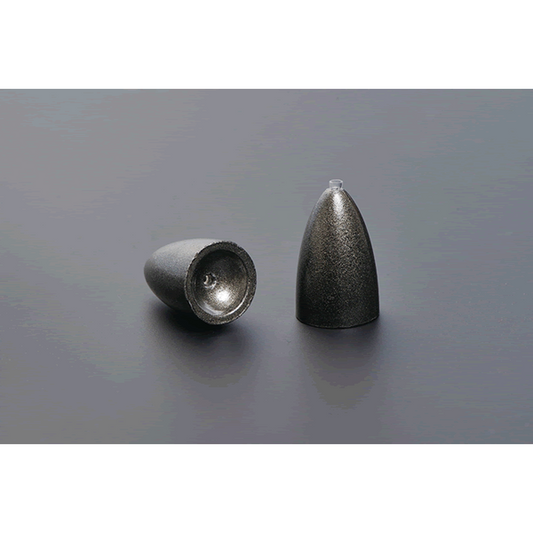
The Texas rig is the standard HRF rig. It is an offset hook, a bead and a cone (bullet) weight. The hook point is buried back in the soft lure, so the lure slides through kelp and weed without snagging. When a wrasse bites, the soft lure lets the point set.
- Thread a bullet weight onto your leader, pointed end first.
- Add a bead to protect the knot.
- Tie on an offset worm hook with a uni knot.
- Push the hook into the nose of the lure and bring it out. Turn it round, and bury the point back in the body.
The weight can run free or be pegged. Weights from 5 to 21 g are used, and 7 to 14 g is a good place to start. Go lighter in calm, shallow water and heavier in wind, depth or tide. For example, Decoy bullet sinkers in 11 g or 7 g.
Free rig
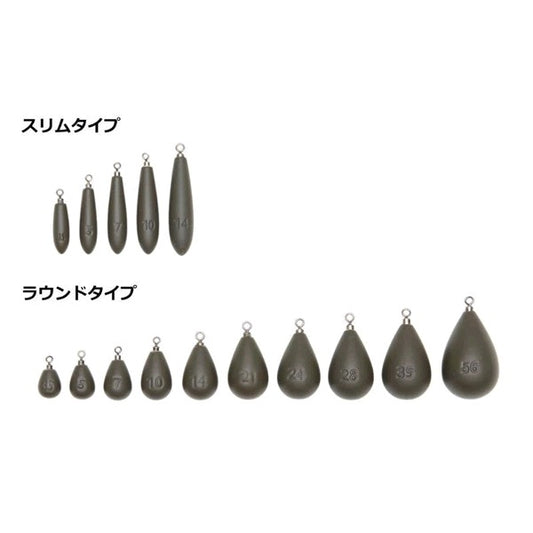
The free rig swaps the cone for a drop-shot style sinker, round or bean shaped, which slides on the line in front of the hook. The rig is said to come from Korea. It uses the same hooks and lures as the Texas rig. For example, the Daiwa Free Rig Sinker R 10 g.
Jig heads and other rigs
A jig head has the weight moulded onto the hook. It works for a slow retrieve over flat weed, but you will lose more of them on rough ground. Wrasse jig heads use narrow-gape J hooks. There are two other UK options. On the cheb rig, the weight clips to the hook. On the jika rig, the hook and sinker share one ring, like a drop shot with no drop.
Hooks
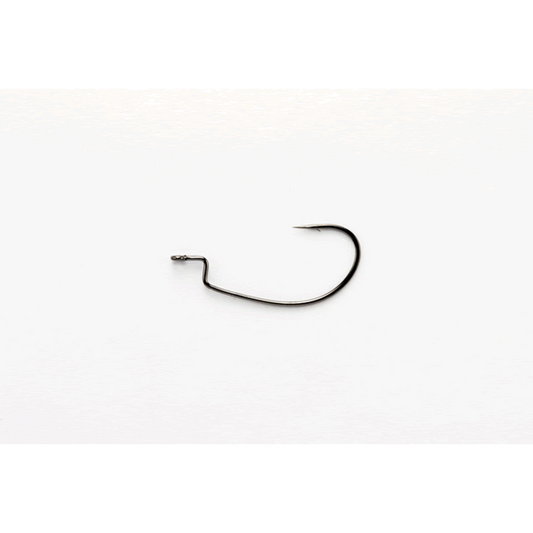
Weedless offset worm hooks are the most used. Size 1/0 is the most common. Go up to 4/0 only for very big fish, because wrasse have small mouths. Use barbless hooks or flatten the barb, as it makes unhooking quicker and kinder to the fish. For example, the Decoy KG Hook Wide (Worm 25) in 1/0. See all worm hooks and sinkers.
Soft lures for wrasse
Wrasse have small mouths. Lures from 1 to 5 inches work, and creature baits of 2.5 to 3.5 inches are the sweet spot.
- Creature baits look like crabs, prawns and bugs. Browns, blacks, greens, reds, oranges, purples and blues all catch, and see-through colours look like prawns. For example, the Ecogear Bug Ants 3 inch or the Bug Ants in Soft Shrimp.
- Worms are good from January to April, for example the Daiwa DR Stick R 3.5 inch.
- Shads work best in late summer and autumn. Do not be put off by 4 or even 5 inch shads. For example, the Bait Breath Egg Tail Shad 3.4.
Carry a few colours, because the colour that works can change from day to day. Cast short, let the rig reach the bottom, then lift and drop it, or draw it slowly back over the rocks. You can also work the lure up and down a rock face. Keep the line tight. A big ballan heads straight for the kelp, and any slack gives it the chance. See all saltwater soft lures.
Rod, reel and line
Rod
Choose a rod of 7 to 8.5 ft with a fairly fast action and a top casting weight of about 30 g. Longer rods help from the shore, and about 7 ft suits a boat. A tubular tip is better than a solid tip for this work. Spinning tackle is the usual choice, but a baitcaster works too. For example, the Shimano Salty Advance Rock Fish S83MH (2.51 m, 8 to 32 g) or, for a baitcaster, the Daiwa HRF SX 76MLB-S (2.29 m, 5 to 25 g).
Reel
Use a 2500 to 3000 size spinning reel. A shallow spool helps but is not essential. Many HRF anglers set the drag quite tight, so a big wrasse cannot reach the snags. See all spinning reels.
Braid and leader
Use PE 0.6 to 1.0 braid, and PE 0.8 is a good choice to start. Four-strand (X4) braid stands up to rock better than eight-strand. For example, Duel Hardcore X4 PE 0.8 (14 lb).
Add a fluorocarbon leader that is a little weaker than the braid, so the leader breaks first. Use about 8 lb over soft weed. Over heavy rock, step up to PE 1.0 braid with a leader of about 15 lb. Join them with an FG knot at home, or a uni-to-uni knot on the rocks. For example, Toray Shock Leader Smooth Rock+ 2.5 (12 lb). See all PE braid and fluorocarbon line.
Some HRF anglers fish a baitcaster with 12 lb fluorocarbon as the main line and no braid at all, which removes the leader knot. For example, Sunline FC Sniper 12 lb.
Handling and returning wrasse
Ballan wrasse grow slowly and take years to mature, so most anglers put them back. Wrasse are edible, but rarely eaten in Britain.
- Use barbless hooks, or flatten the barbs.
- Take care with the sharp spines on the back fin.
- A landing net helps on rock marks.
- Unhook the fish quickly and let it swim off.
Some areas protect wrasse by law. In the Devon and Severn IFCA district, rock cook wrasse may not be kept at all, and commercial wrasse potting has size limits. Check your local IFCA rules before you keep any fish.
Recommended tackle






Browse all saltwater soft lures, worm hooks, sinkers, PE braid and fluorocarbon line.
FAQ
What does HRF mean in fishing?
HRF stands for hard rock fishing. It is lure fishing for bigger rock fish. In the UK it mainly means fishing for ballan wrasse with soft lures on weedless rigs.
When is wrasse season in the UK?
Spring to autumn, and autumn is the best time for a big fish. On the central south coast the season can run from late March to mid December. Wrasse feed in daylight.
What is the best rig for wrasse?
Start with a Texas rig: a bullet weight, a bead and an offset hook with the point buried in a soft lure. It slides through kelp and rock with few snags.
What weight should I use for a Texas rig?
Weights from 5 to 21 g are used. Start with 7 to 14 g, and go heavier in wind, deep water or strong tide.
What soft lures catch ballan wrasse?
Creature baits of 2.5 to 3.5 inches, worms from January to April, and shads in late summer and autumn. Carry a few colours, as the best one can change from day to day.
What line do I need for HRF?
PE 0.8 braid is a good start, with a fluorocarbon leader a little weaker than the braid. Over heavy rock, step up to PE 1.0 with a leader of about 15 lb.
Can you catch wrasse at night?
Very rarely. Wrasse feed in daylight and hide in the rocks after dark, so fish in the day.
Should I return wrasse?
Most anglers do. Ballan wrasse grow slowly and take years to mature. Use barbless hooks, handle them with care and let them go quickly.
Sources
- Hard Rock Fishing: Ultimate guide to lure fishing for wrasse and HRF, Wrasse fishing FAQ, What is HRF? and My favourite wrassing set-up (8 April 2025)
- British Sea Fishing: Wrasse and Fishing with jelly and soft lures
- Devon and Severn IFCA: Minimum conservation reference sizes
- Maritime and Coastguard Agency
